
When debt starts affecting your ability to cover essentials, choosing the right solution can feel overwhelming. Two of the most commonly searched options in South Africa are debt review and debt consolidation. While both aim to make debt more manageable, they work in very different ways and are suited to very different financial situations.
Understanding the key differences, benefits, risks, and long-term impact of each option is essential before committing. In this guide, we break down debt review vs. debt consolidation so you can make an informed, confident decision based on your circumstances.
Understanding Debt Review in South Africa
Debt review (also called debt counselling) is a legal debt relief process regulated by the National Credit Act. It is designed for consumers who are over-indebted and no longer able to meet their monthly debt obligations.
How Debt Review Works
Once you enter debt review:
- A registered debt counsellor assesses your finances
- You are declared over-indebted (if you qualify)
- Your monthly debt repayments are restructured
- Interest rates are often reduced
- Legal action from credit providers is prevented
- You make one consolidated monthly payment through a Payment Distribution Agency
Debt review focuses on affordability, ensuring you can still cover essential living expenses while repaying your debt in a structured way.
Who Debt Review Is Best For
Debt review is typically suited to:
- Consumers who cannot keep up with debt repayments
- People receiving collection calls or legal threats
- Households relying on credit for basic expenses
- Consumers with multiple unsecured debts
- Anyone at risk of repossession or judgment
Understanding Debt Consolidation
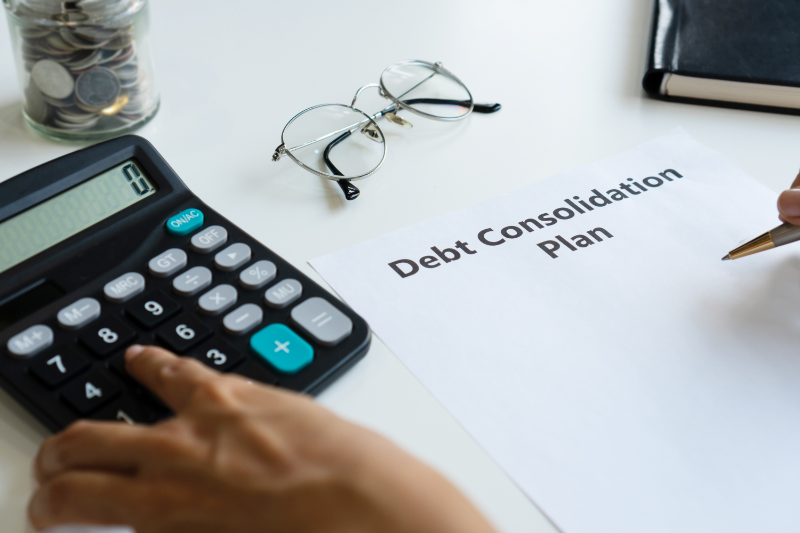
Debt consolidation involves taking out a new loan to pay off existing debts, leaving you with a single monthly repayment.
This option does not provide legal protection and depends entirely on your ability to qualify for new credit.
How Debt Consolidation Works
- You apply for a consolidation loan
- Existing debts are settled
- You repay the new loan over a fixed term
- Interest rates depend on your credit profile
- No legal process or court involvement
In theory, consolidation simplifies payments, but in practice, it often extends debt terms and increases total repayment costs.
Who Debt Consolidation Is Best For
Debt consolidation may suit:
- Consumers with good to excellent credit
- People still meeting all monthly obligations
- Individuals with stable income and low risk
- Those with manageable debt levels
Key Differences Between Debt Review and Debt Consolidation
Legal Protection
Debt review offers legal protection against creditors once you are placed under debt review. Debt consolidation does not protect you from legal action.
Credit Requirements
Debt consolidation requires a good credit score. Debt review is specifically designed for people whose credit profile has already deteriorated.
Interest Rates
Debt review often reduces interest rates through negotiation. Debt consolidation loans may carry higher interest, especially if your credit score has dropped.
Risk of Further Debt
Under debt review, you cannot take on new credit. With consolidation, access to credit often remains open, increasing the risk of re-indebtedness.
Long-Term Cost
Debt consolidation can appear cheaper upfront but may cost more over time due to extended repayment terms. Debt review focuses on sustainable repayment rather than convenience.
Pros and Cons of Debt Review
Advantages
- Legal protection from creditors
- Reduced monthly repayments
- Lower interest rates
- Structured repayment plan
- Protection of essential assets
- Single monthly payment
Disadvantages
- Temporary impact on credit profile
- No access to new credit
- Requires financial discipline
- Must complete the process fully
Pros and Cons of Debt Consolidation
Advantages
- Single monthly payment
- No legal process
- May improve cash flow short term
- Faster approval (if you qualify)
Disadvantages
- Requires good credit
- No legal protection
- Higher interest risk
- Potential for deeper debt
- Easy to accumulate new credit
Which Option Is Best for You?
Choose Debt Review If:
- You are missing payments or close to default
- You are receiving legal notices or summons
- Your debt repayments exceed your affordability
- You need structured, long-term relief
- You want legal protection
Choose Debt Consolidation If:
- You are still coping with repayments
- Your credit score is strong
- You qualify for favourable interest rates
- Your debt is limited and manageable
- You have strict financial discipline
If you are already struggling to keep up with payments, debt consolidation can worsen your situation. In these cases, debt review is often the safer and more sustainable option.
The Long-Term Impact on Your Financial Health
Debt Review
Debt review is not permanent. Once all debts are paid:
- You receive a clearance certificate
- Credit listings are updated
- You can rebuild your credit profile
- Many consumers report better financial habits post-review
Debt Consolidation
Consolidation does not address spending behaviour. Without discipline, many consumers end up with:
- A consolidation loan
- New credit cards
- Increased financial pressure
The best solution is not the quickest one — it’s the one that prevents repeat debt.
Final Thoughts
Debt review and debt consolidation are not interchangeable solutions. One is a regulated, protective process designed for financial distress. The other is a financial product that works only when debt is still under control.
Choosing the wrong option can delay recovery and increase long-term financial stress. Understanding where you stand financially is the first and most important step.
Frequently Asked Questions (FAQ)
Is debt review better than debt consolidation?
Debt review is better for consumers who are already struggling to meet monthly payments. Debt consolidation is only suitable if you can still comfortably afford your debt.
Can I be rejected for debt consolidation?
Yes. Lenders assess your credit score, affordability, and risk profile. Many over-indebted consumers do not qualify.
Does debt review mean I lose my assets?
No. Debt review is designed to help you keep essential assets by making repayments affordable.
How long does debt review last?
Debt review lasts until all listed debts are paid in full. The duration depends on your repayment plan.
Will debt consolidation improve my credit score?
Not necessarily. Missed payments or high interest can further damage your credit profile.
Can I exit debt review early?
Only once all debts are settled or if you were incorrectly placed under debt review and a court orders removal.
Can I apply for new credit under debt review?
No. This restriction protects you from falling deeper into debt.
Is debt review legally binding?
Yes. It is a regulated process under South African law.